Trying to conceive? Use an ovulation calculator to find your fertile window
SEPTEMBER 24, 2026
Pregnancy is a wish you can start preparing for already at the planning stage. Understanding when ovulation takes place can help improve the chances of conception. An ovulation calculator can also be a helpful tool when you are trying to identify your most fertile days.
When dreaming of a baby, it is also good to leave room for a little realism. Very few people become pregnant on the first try. Even for a fertile couple, the chance of pregnancy is only around 25% during one menstrual cycle. Stress may also reduce the likelihood of becoming pregnant. That is why it is important to approach your baby dream with patience and to support the conditions that make conception more likely.
When is the best time to get pregnant? Understanding ovulation and fertility
Ovulation is the moment when an egg is released from the ovary. After ovulation, the egg remains capable of being fertilised for around 24 hours. If there are no sperm in the woman’s body at that time, pregnancy cannot begin. Sperm can remain capable of fertilisation in the woman’s body for around 3–4 days. For this reason, it is recommended to have intercourse every couple of days before ovulation. The chances of becoming pregnant are highest from intercourse that takes place shortly before ovulation. However, couples trying for a baby should also remember that pregnancy may begin from intercourse that has taken place as early as 5–6 days before ovulation.
When does ovulation happen? Your cycle length matters
Ovulation usually takes place around 12–14 days before the start of your period. To estimate your own ovulation timing as accurately as possible, it is especially important to know the length of your menstrual cycle.
A normal menstrual cycle is typically 24–38 days long, with an average length of 28 days. The cycle length is counted from the first day of bleeding to the first day of the next bleed. Some people have a very regular cycle, but when estimating ovulation with an ovulation calculator or other calendar-based methods, it is good to remember that many women’s cycle length can vary by a few days, or even by up to a week.
In a regular 28-day cycle, ovulation usually occurs around the middle of the cycle. For those with a shorter cycle and a longer period, it may come as a surprise that ovulation can happen quite soon after bleeding has ended. If you have not paid much attention to your menstrual cycle before, tracking apps on your phone may help you understand the different phases of your cycle.
Ovulation calculator: A helpful tool for finding your fertile days
An ovulation calculator can help you estimate your fertile window, ovulation day and even an estimated due date if pregnancy begins during that cycle. You only need to enter the first day of your period and the length of your menstrual cycle:
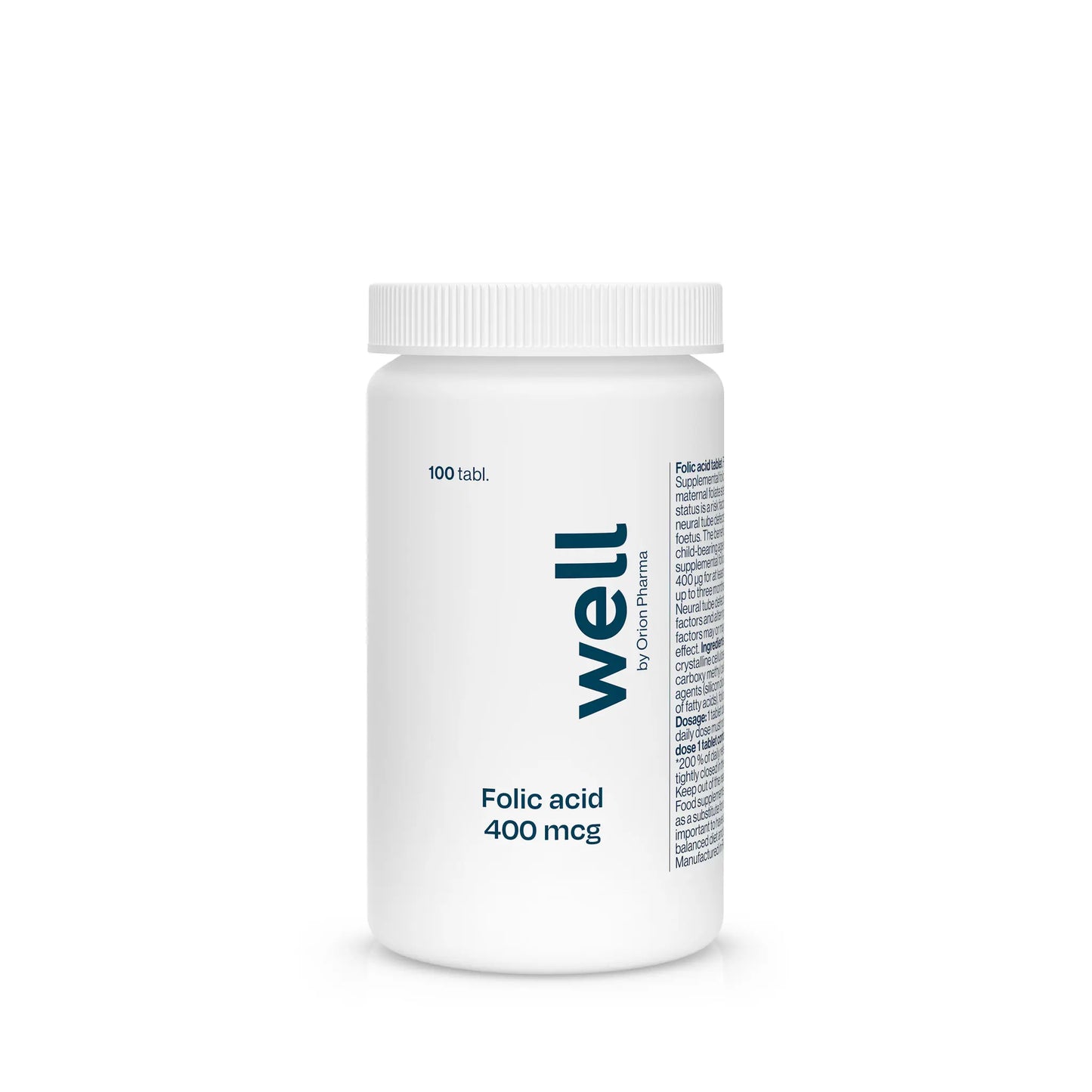
Well by Orion Pharma
Folic Acid 400 mcg
Our Folic Acid 400 mcg tablets is here to support you on your journey, whether you’re planning to become pregnant or already expecting your little one.

How to recognise ovulation: Body signs and ovulation tests
There is no need to feel pressure about identifying the exact day of ovulation. What matters most is having intercourse regularly after your period. Stress may reduce the chances of becoming pregnant, so it is worth approaching the process with patience and kindness towards yourself.
Your body may also give you signs that ovulation is approaching:
- Ovulation discharge: Ovulation can sometimes be recognised from clear, stretchy cervical mucus. This mucus is usually most abundant 1–2 days before ovulation.
- Ovulation pain: Some people experience one-sided lower abdominal pain around ovulation. However, ovulation pain is not always a reliable way to identify the exact timing, as the pain may occur before, during or even after ovulation.
- Basal body temperature: Tracking body temperature can help identify when ovulation has taken place. This method requires an accurate thermometer and consistent daily morning measurements over a longer period of time.
Ovulation tests, also known as LH tests, are another useful way to estimate ovulation timing. Home tests can be bought, for example, from pharmacies. These tests aim to detect the LH hormone surge that usually occurs 1–2 days before ovulation.
It is good to keep in mind that if intercourse is timed only according to positive ovulation test days or visible ovulation symptoms, several earlier fertile days may be missed.
Preparing for pregnancy: Vitamins, minerals and healthy lifestyle habits
There are conscious steps you can take already when planning a pregnancy.
Vitamins and minerals when trying to conceive
When planning a pregnancy, it is worth paying attention to the intake of certain vitamins and minerals. A folic acid supplement of 400 micrograms per day is recommended until the end of the first trimester of pregnancy. It is advisable to start taking folic acid already 2–3 months before trying to conceive. Well by Orion Pharma Folic Acid 400 mcg can be a simple way to include folic acid in your daily pregnancy planning routine. Iron intake is also important to consider. Iron levels often decrease during pregnancy, and some women may already have low iron levels before pregnancy, especially if they have heavy periods.
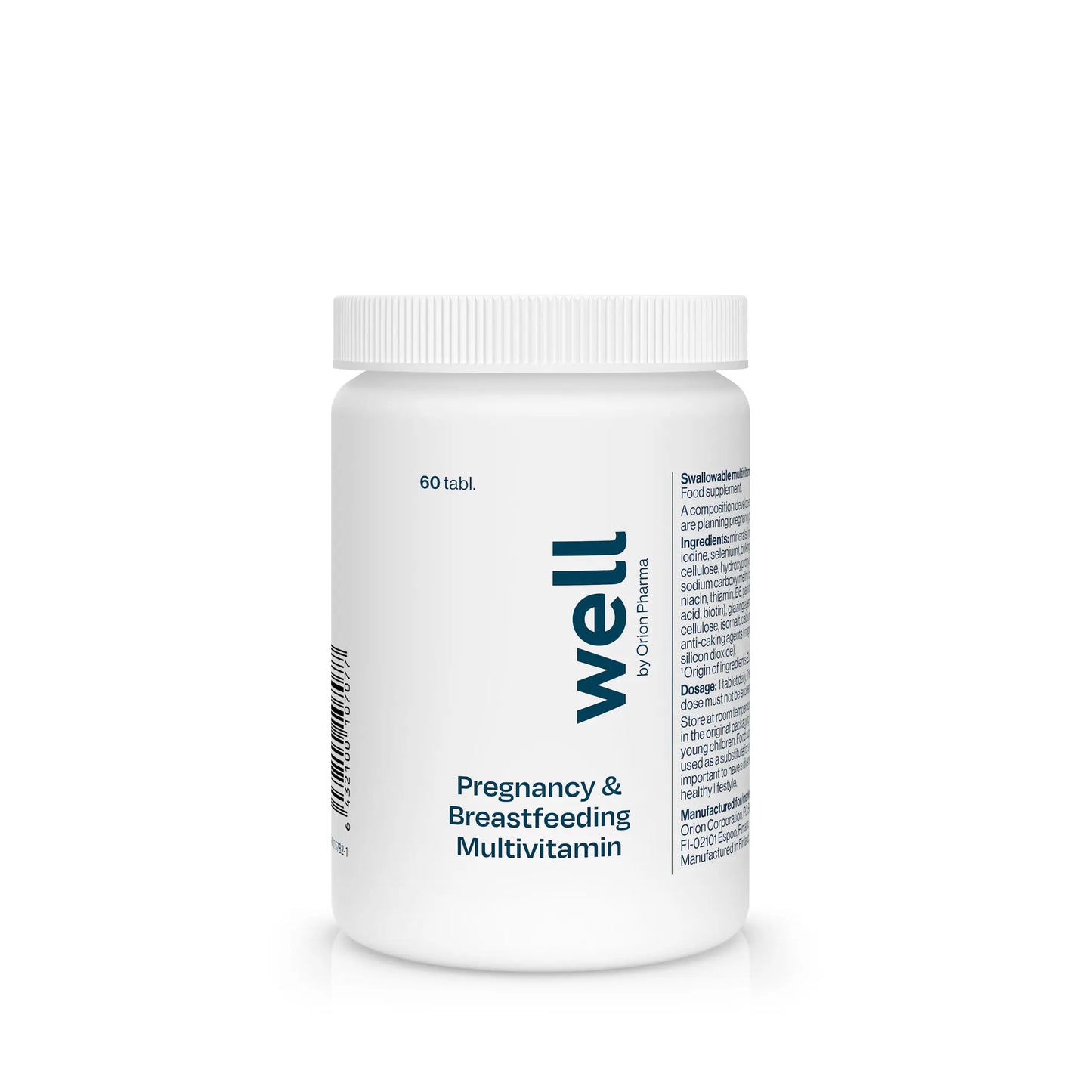
Please note that vitamin A in food supplements is not recommended during pregnancy. If you use a multivitamin, choose one that does not contain vitamin A. Well by Orion Pharma Pregnancy & Breastfeeding is a multivitamin suitable for those planning pregnancy, as well as for pregnant and breastfeeding women.
Healthy lifestyle habits can support fertility
Healthy lifestyle habits can improve the likelihood of becoming pregnant. Aim to sleep around eight hours per night and stay physically active on a regular basis. It is also good to pay attention to your diet, especially if you are underweight or overweight. A normal body mass index is 19–25. Being underweight or overweight can reduce fertility in both women and men.
Smoking is worth stopping, as it can impair both ovarian function and sperm quality. Alcohol should be used in moderation already in the planning phase, as heavy alcohol consumption may disturb sperm production and reduce female fertility.
Intensive exercise and stress of any kind may also make it more difficult to become pregnant. This is why it is important to take a balanced and compassionate approach to healthy lifestyle habits as well.
Well by Orion Pharma
Pregnancy & Breastfeeding Multivitamin
Pregnancy & Breastfeeding Multivitamin specifically for women who are planning a pregnancy, are pregnant, or breastfeeding.

When to contact a doctor if pregnancy does not happen
Very few people become pregnant during the first cycle of trying. All women sometimes have cycles where no egg is released. The timing of intercourse must also align with the fertile window for pregnancy to begin.
If your menstrual cycle is regular and normal, you have intercourse every couple of days until the middle of the cycle, and pregnancy has still not begun within one year, it is advisable to contact a doctor.
Key things to remember when planning a pregnancy
- What matters most is having intercourse regularly after your period and up until ovulation. There is no need to feel pressure about identifying the exact ovulation day. An ovulation calculator can be used as a helpful tool to estimate ovulation timing.
- Pay attention to your lifestyle already when planning a pregnancy. Being underweight or overweight, smoking and heavy alcohol use can reduce fertility.
- Folic acid supplementation is recommended already 2–3 months before trying to conceive, and it should be continued throughout the first trimester of pregnancy.
- If your menstrual cycle is regular and normal, you have intercourse every couple of days before ovulation, and pregnancy does not begin within one year, it is advisable to seek medical advice.
- A pregnancy test should be taken only once your period is late.
About the author
Tanja Kipinoinen, eCom Manager
Passionate about promoting well-being and improving customer experience in digital channels. Responsible for developing the online store and content in collaboration with experts in dietary supplements and cosmetics development to ensure that information is reliable and easy to understand.
We continuously work to make sure the content we create is high-quality, up-to-date, and engaging. All our content is based on independence, objectivity, and expertise. In addition to our skilled content creators, Orion Pharma’s product specialists regularly review the materials.
Read more
View all-
Trying to conceive? Use an ovulation calculator...
Pregnancy is a wish you can start preparing for already at the planning stage. Understanding when ovulation takes place can help improve the chances of conception. An ovulation calculator can...
Trying to conceive? Use an ovulation calculator...
Pregnancy is a wish you can start preparing for already at the planning stage. Understanding when ovulation takes place can help improve the chances of conception. An ovulation calculator can...
-
Safe exercise during pregnancy and after birth ...
Staying active during pregnancy and after childbirth can support both physical and mental wellbeing. Gentle forms of exercise can help the body cope with pregnancy, support recovery after birth and...
Safe exercise during pregnancy and after birth ...
Staying active during pregnancy and after childbirth can support both physical and mental wellbeing. Gentle forms of exercise can help the body cope with pregnancy, support recovery after birth and...
-
How do I know if I am pregnant? Recognising the...
Tender and swollen breasts, nausea and vomiting are among the most common first signs that a pregnancy has begun. Increased tiredness, a more frequent need to urinate and heartburn can...
How do I know if I am pregnant? Recognising the...
Tender and swollen breasts, nausea and vomiting are among the most common first signs that a pregnancy has begun. Increased tiredness, a more frequent need to urinate and heartburn can...