Folate, folic acid and pregnancy planning: when should you start and why does timing matter?

APRIL 27, 2026

If you're thinking about getting pregnant, or if there's any chance you might become pregnant in the coming months, you've probably heard that folic acid is important. But when exactly should you start taking it? And why does timing matter so much?
The answer might surprise you: ideally, you should start at least one month before you conceive. In many situations, starting even earlier is a smart choice.

Why start folic acid before you're pregnant?

Supplemental folate intake increases maternal folate status. Low maternal folate status is a risk factor in the development of neural tube defects in the developing foetus.* This is why starting supplementation early matters: by the time you know you're pregnant, critical early development is already well underway.

Folate also contributes to maternal tissue growth during pregnancy. By starting supplementation early, you're building up your folate stores so they're already at a good level when conception happens.
According to Livsmedelsverket, the Swedish Food Agency, all women of childbearing age who may become pregnant are recommended to supplement with 400 micrograms of folic acid daily. This applies not only to those actively planning a pregnancy, because many pregnancies are unplanned, the recommendation covers anyone who could conceive in the coming months.

When to start: common scenarios

  • If you're stopping hormonal contraception:
    Many women stop taking birth control pills several months before they plan to conceive. This is an ideal time to start folic acid supplementation. Your cycle may take a few months to regulate, and starting folic acid during this transition ensures you're already prepared when ovulation returns.
  • If you have irregular cycles:
    When your periods are unpredictable, it's harder to know exactly when you might conceive. Starting folic acid as soon as you begin thinking about pregnancy — or simply because you're of childbearing age and could become pregnant — removes the guesswork entirely.
  • If pregnancy might be several months away:
    Perhaps you're waiting for the right moment. Starting folic acid early does no harm. Folate also contributes to the normal function of the immune system and to the reduction of tiredness and fatigue, supporting your overall wellbeing while you prepare for the future.

Diet and supplementation: working together

Folate is found naturally in many everyday foods. Livsmedelsverket highlights legumes, dark green leafy vegetables, wholegrains, fruits, and berries as good dietary sources. Eating a varied diet rich in these foods is a great foundation.
According to the Nordic Nutrition Recommendations and the guidance applied by Livsmedelsverket, many women do not reach adequate folate intakes through food alone. For this reason, women who may become pregnant are advised to take a daily supplement of 400 micrograms of folic acid. During pregnancy, the recommended total folate intake is higher and is primarily intended to be achieved through a balanced diet rich in folate containing foods. Folic acid supplementation is therefore seen as a targeted measure before and in early pregnancy, alongside — not instead of — a nutritious and varied diet.

How to support healthy folate levels in practice

Supporting healthy folate levels is straightforward.

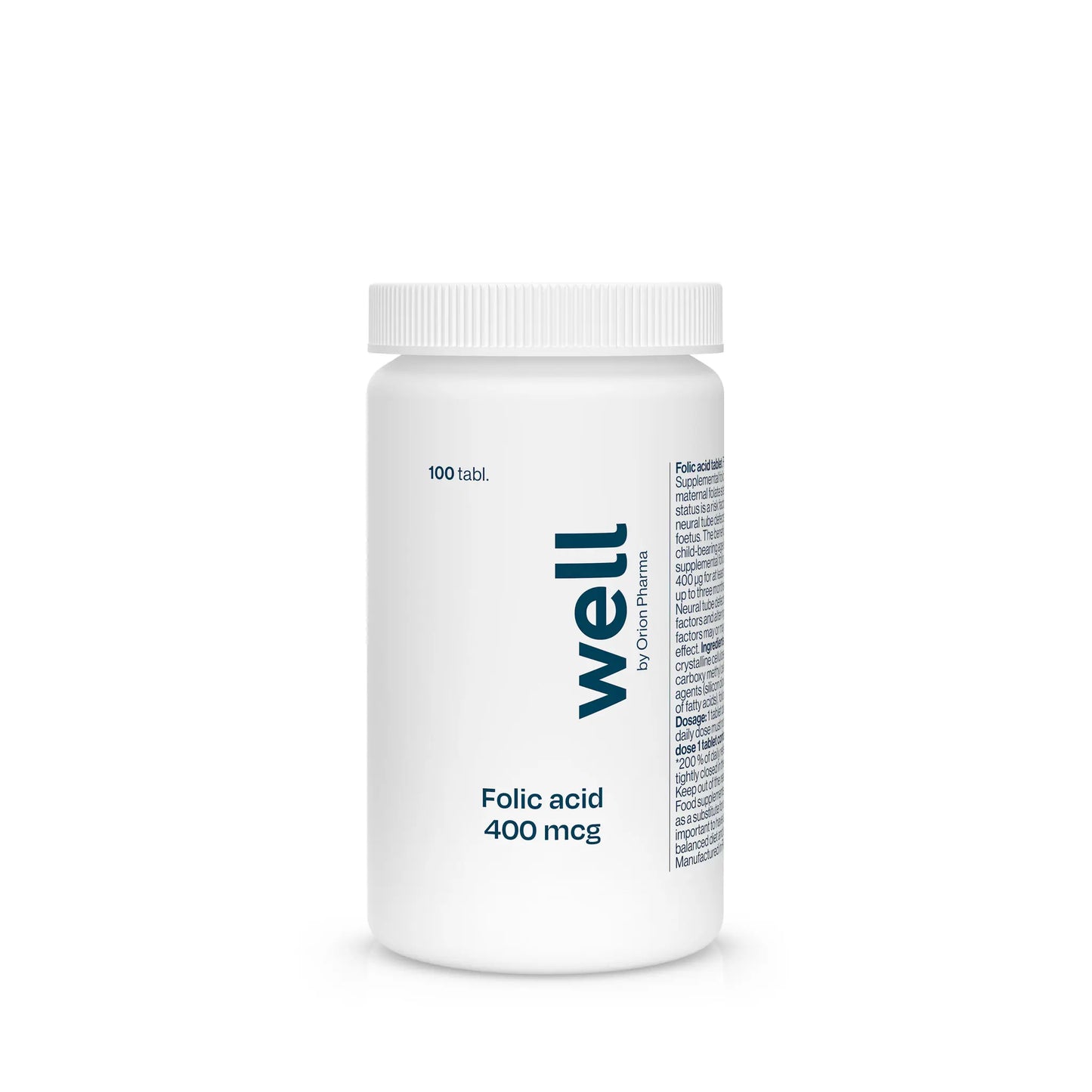
  • Start supplementing consistently. Daily supplementation with 400 micrograms of folic acid provides exactly the amount Livsmedelsverket recommends for women who may become pregnant. A product like Folic Acid 400 mcg from Well by Orion Pharma offers a convenient daily tablet that fits easily into your morning routine.
  • Continue throughout early pregnancy. Once pregnant, keep taking folic acid through at least the first trimester — through week 12. Many healthcare providers recommend continuing throughout pregnancy.
  • Combine supplementation with folate-rich foods. Supplements and diet work best together.

A simple step that makes a real difference

Whether you're stopping contraception next month, have irregular cycles, or are simply a woman of childbearing age who could become pregnant: today is a good day to start.

Supplemental folate intake increases maternal folate status. Low maternal folate status is a risk factor in the development of neural tube defects in the developing foetus.* By starting early, you're giving any future pregnancy the best possible foundation, whenever it happens.

Pick up a supplement, take one tablet daily, and know you've taken a meaningful step.

*The beneficial effect for women of child-bearing age is obtained with a supplemental folic acid daily intake of 400 μg for at least one month before and up to three months after conception.

Sources: Livsmedelsverket (the Swedish Food Agency), Nordic Nutrition Recommendations

Woman in a blue striped shirt sitting on a wooden chair against a beige background

About the author

Tanja Kipinoinen, eCom Manager
Passionate about promoting well-being and improving customer experience in digital channels. Responsible for developing the online store and content in collaboration with experts in dietary supplements and cosmetics development to ensure that information is reliable and easy to understand.

We continuously work to make sure the content we create is high-quality, up-to-date, and engaging. All our content is based on independence, objectivity, and expertise. In addition to our skilled content creators, Orion Pharma’s product specialists regularly review the materials.